
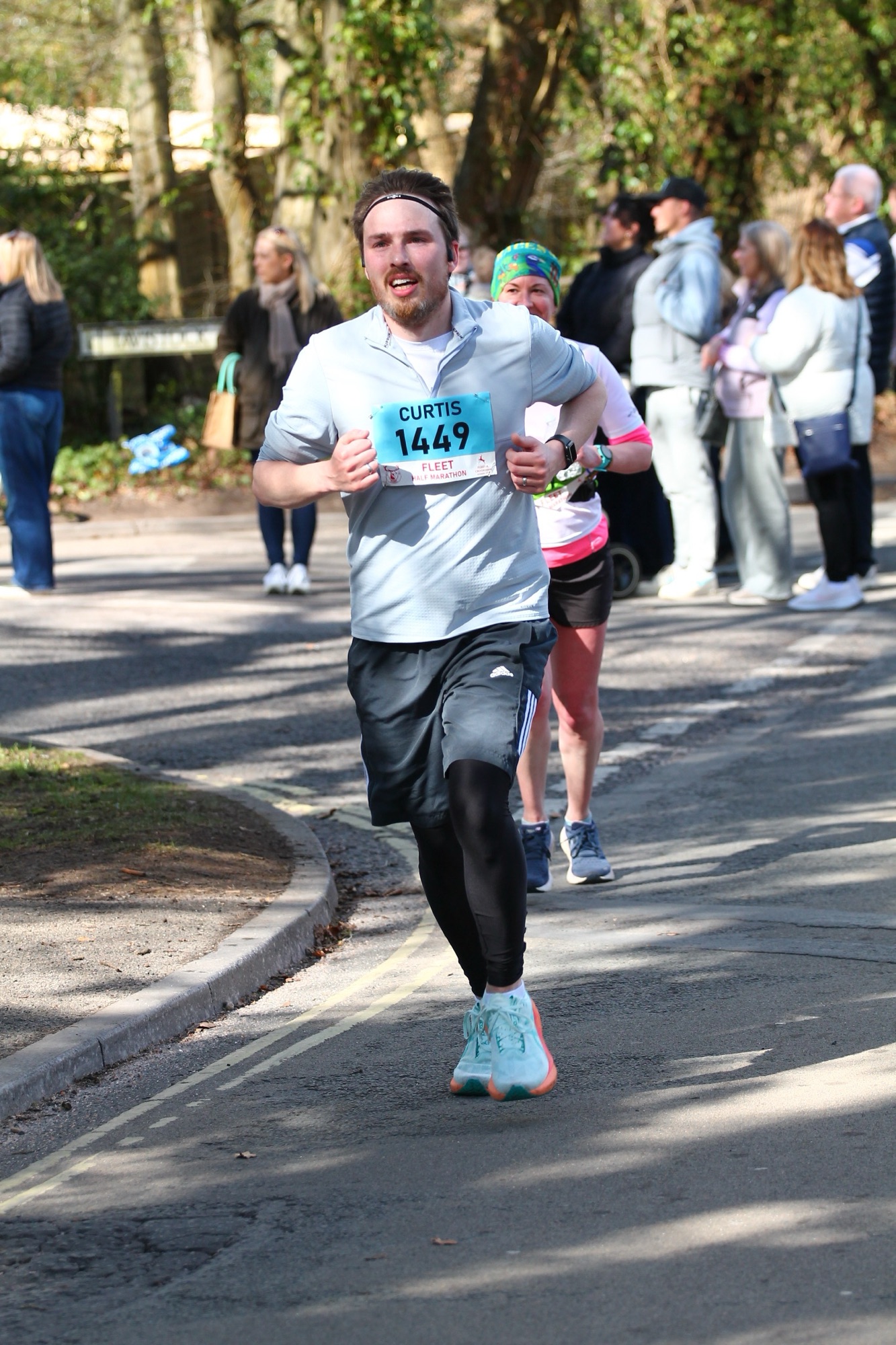
I laced up my running shoes again at the end of 2024, after what felt like a lifetime off. A lot had changed. I was out of shape, the beer belly was creeping in, and I was navigating the chaos of being a new dad. Sleep had become a rare luxury, and the daily grind—commuting into London and juggling newborn nights—left my head in a constant fog.
I didn’t start running to chase a goal or hit a milestone. I started because I needed space. Space to think, to breathe, to clear the mental clutter that had built up from long days and even longer nights. But when your life is packed from morning to night, even finding time to put on your shoes feels impossible. At least, it did.
The truth is, I had time—I was just spending it slumped on the sofa, convincing myself I didn’t. The turning point came around Christmas. I joked to my mum that maybe I’d run a half marathon with my younger, much fitter brother. She laughed. Not in a cruel way, but in that “you’re dreaming” kind of way. That was all the motivation I needed.
I’d never run more than 10K, and that was a decade ago at university—back when I had more free time than I knew what to do with. So I bought a new pair of shoes, committed to three unstructured runs a week, and got started.
The next 12 weeks were far from perfect. I caught three bugs from my daughter starting nursery, my training plan was more “vibes” than structure, and my attitude wasn’t always great. But somehow, I stuck with it. And against the odds, I crossed the finish line of my first half marathon—under two hours.
It felt incredible.
The Full Story
I won’t lie—it was a struggle. I hadn’t yet caught the running bug. Winter colds knocked me back, and the pressure of fulfilling my self-promise to run 21.1 km started to build. Gradually, I increased my distance, and that was tough. With long-distance running, you’re not just battling breathlessness—you’re fighting the complete shutdown of your lower body. Your legs go heavy, your ankles stiffen, your knees ache, your hamstrings tighten.
But it gets easier. The more you push your distance threshold, the more those aches and pains get pushed back with it. Over time, you learn to distinguish between the niggles you can run through and the ones you need to stop for.
The local parkrun became a great place to practice shorter, faster runs. There’s nothing like a bit of race-day adrenaline to push you to the finish line—something that’s all too easy to give up on when you’re running solo. Having a consistent run to benchmark against really helped me track my progress.
Discover the Joy of Parkrun: The UK’s Favourite Weekly Running Tradition
In the two weeks leading up to the race, I was hit with back-to-back stomach bugs. Training went completely out the window. I managed just two short runs, and morale was at an all-time low. I started to worry I might have to pull out. Even my mum rang, concerned I was pushing myself too hard and shouldn’t race. Naturally, that was all the motivation my stubborn self needed—I was running.
Race Day
Race morning arrived, and surprisingly, I felt good. My daughter had done me a solid and slept through the night, so I was well rested. No excuses. I had a light breakfast, got dressed, and walked the few kilometres to the start line to warm up on a cold March Sunday.
After running with a few hundred people at parkruns, I hadn’t expected the sheer scale of the half marathon. Thousands of runners in their race-day gear, many already jogging or sprinting around the park to warm up. I figured I’d better join in—clearly, that was the thing to do.
The call came, and I made my way to the start line… or rather, about 300 metres south of it. I had my gels ready, hoping they wouldn’t send me sprinting to one of the many mobile toilets along the course. The weather was perfect—cold, dry, and sunny. The mood was electric. My race-day adrenaline was kicking in.

The First 10K
The gun went off. Less dramatic than I’d imagined. A shuffle-jog to the start line, then we found our stride. We were off. Oh god—21 km to go.
As any runner knows, it’s easy to go out too fast. I’d done it before. But this time, I was disciplined. I stuck to my pace, even as people streamed past me. It’s a hit to the ego, but I reminded myself: I’ll get them later.
At kilometre 1, I glanced at my watch—5:30 min/km. Damn. So much for discipline. But I felt good, and with a downhill stretch ahead, I decided to “stick to my pace.” I’d crept past the 5:45 pacer and spotted the 5:30 pacer in the distance. “Better catch up,” I thought—he might be the one to drag me across the line when things got tough.
I caught up with him around the 5 km mark. I looked down—5:20 min/km. He’d been further ahead than I thought.
But I felt terrific. My legs had loosened up, I was gliding. Breathing was steady, form was solid, heart rate under control. My body was telling me this pace was working. Maybe I didn’t need the pacer after all.
The Pain Cave
I started slowly overtaking runners. One by one. Steady on the uphills, let it rip on the downhills. I was clocking closer to 5:10 min/km, and at kilometre 9, I even dipped under 5:00. It felt too good to be true. I eased off slightly—no way I could hold that pace for another 12 km. Ugh, 12 km. That was the reminder I needed. I settled into a comfortable 5:20 rhythm.
Then came kilometre 15. The niggles returned with a vengeance. My right Achilles tightened. My left knee ached. Uh oh. I’d pushed too hard. I adjusted my cadence, shortened my stride—it was bearable. I’d run through niggles before. I set a new target: get to 20 km. Worst case, I could walk the last kilometre and still finish under two hours.
Dangerous thinking. In training, every time I’d lowered my target mid-run, I’d stopped at that point. Five kilometres to go.
The stretch from 15 to 20 km was brutal. The course quieted down—few spectators, runners thinning out. These were the hardest kilometres. Still over 5 km to go, and my legs were screaming. But I kept running. Sometimes, that’s all you can do. Just keep running. Forget the distance. Forget the time.
At kilometre 17, my watch died. No more pace, no more distance tracking. In some ways, it helped. In others, it rattled me. You forget how easily your mind can drift when you’re deep in the pain cave. But it didn’t matter. Just keep running. By now, the pace was baked into my legs. I was still tracking around 5:15 at last glance. Time to lock in.
The Final Kick
I knew roughly where the finish line was. I was on the home straight—albeit a bloody long one. A pair of runners overtook me near the end, and I overheard one say, “Just one lap of the running track to go.” I thought, right—400 metres. Time to pick it up.
About 500 metres later, I saw the “500m to go” sign. I was beginning to think that felt like a long 400m with no finish line in sight. Now it was time to pick it up.
Somehow, I pulled off a sub-5-minute final kilometre and crossed the line in 1:54:48. I had run straight past my family—who’d been waiting for over an hour—without even turning to look. I was in the zone.
Enough Rambling. I did it — and so can you. If you’ve been thinking about your first half marathon, consider this your push. Sign up, commit, and see where your legs take you.
Leave a Reply